

Key takeaways
- An SEO audit is the essential first step before any SEO strategy
- A complete audit covers 4 dimensions: technical, on-page, off-page, and competitive analysis
- Google Search Console and PageSpeed Insights are enough for a first free diagnosis
- The key deliverable: an action plan prioritized by impact, not a list of 200 problems
- Redo an audit every 12 to 18 months, or before every website redesign
Why is an SEO audit essential?
Imagine a doctor prescribing treatment without examining the patient first. That’s exactly what agencies do when they launch an SEO strategy without a prior audit.
An SEO audit serves three essential purposes:
- Identify technical blockers that prevent Google from properly indexing your site
- Spot untapped content opportunities in your market
- Understand your competitive positioning to set realistic priorities
The 4 dimensions of a complete SEO audit
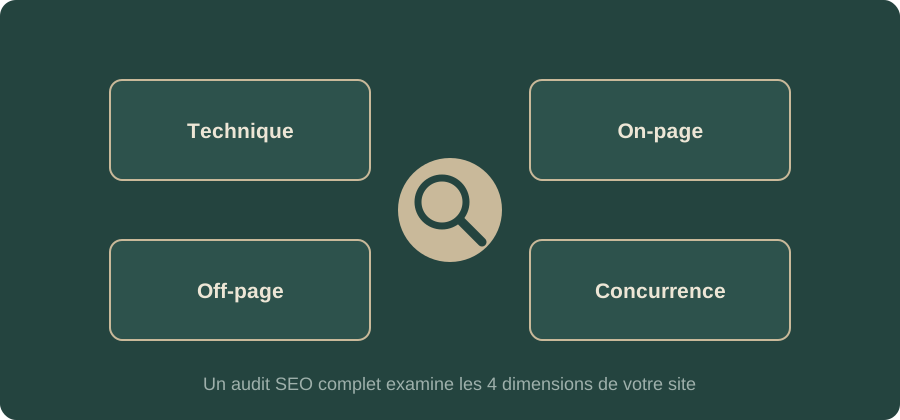
1. Technical audit
The technical audit analyzes everything Google sees before it even reads your content.
Crawlability & indexation
Start by checking that Google can access all your important pages. Use Google Search Console to identify crawl errors and pages excluded from the index.
Things to check:
robots.txtfile (no rule is blocking your important pages)- XML sitemap (up to date, submitted to Google Search Console)
- Unintentional
noindextags - 404 errors and redirect loops
Core Web Vitals
Since 2021, performance has been an official ranking factor. Measure your Core Web Vitals with PageSpeed Insights:
- LCP (Largest Contentful Paint): should be < 2.5s
- FID/INP: interaction time < 200ms
- CLS (Cumulative Layout Shift): score < 0.1
HTTPS architecture
Your site must be entirely on HTTPS, with no mixed content (images or scripts served over HTTP on HTTPS pages).
2. On-page audit
The on-page audit analyzes the quality and optimization of your content.
Title tags and meta descriptions
Every page should have a unique title tag (50-60 characters) and meta description (150-160 characters). Look for duplicates, missing tags, and tags that are too long.
Heading structure (H1, H2, H3…)
Every page should have a single H1 containing the main keyword. The heading hierarchy should be logical and consistent.
Duplicate content
Duplicate content dilutes your authority. Identify pages with similar content and use canonical tags to indicate the reference page.
Internal linking
Good internal linking distributes authority across your pages and guides visitors. Check that your important pages receive links from other pages on your site.
3. Off-page audit (backlinks)
Your backlink profile is one of the most powerful signals for Google.
Link profile analysis
Use Ahrefs or SEMrush to analyze:
- The number of referring domains
- Domain authority (DR)
- The quality and relevance of the sites linking to you
- Anchor text ratio (exact match, branded, generic)
Detecting toxic links
Some links can harm your rankings. Identify links from low-quality sites or link farms and disavow them via Google Search Console.
4. Competitive analysis
Understanding why your competitors rank better than you is the key to overtaking them.
Identifying your SEO competitors
Your SEO competitors aren’t necessarily your direct business competitors. They’re the sites ranking for your target keywords.
Analyzing top-performing content
Which articles or pages drive the most traffic for your competitors? These pieces of content represent opportunities to invest in or outperform.
Gap analysis
Which keywords are your competitors capturing that you aren’t yet? This is often where the best opportunities are hiding.
The essential tools for an SEO audit
| Tool | Use | Price |
|---|---|---|
| Google Search Console | Indexation, errors, performance | Free |
| Ahrefs | Backlinks, keywords, competitors | Paid |
| Screaming Frog | Full technical crawl | Freemium |
| PageSpeed Insights | Core Web Vitals | Free |
| SEMrush | Overall analysis | Paid |
Prioritizing actions after the audit
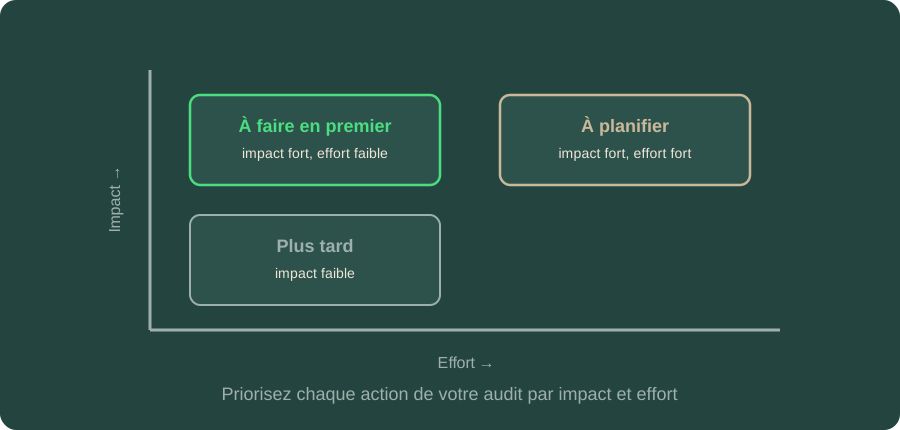
An audit can reveal dozens of issues. The question is: where do you start?
Our rule: prioritize by impact/effort.
High impact, low effort (do first):
- Fix critical indexation errors
- Add missing title tags and meta descriptions
- Fix broken redirects
High impact, high effort (plan ahead):
- Improve Core Web Vitals
- Create missing content for priority keywords
- Launch a link building campaign
Low impact (do once everything else is handled):
- Optimize secondary tags
- Fine-tune secondary internal linking
Conclusion
A rigorous SEO audit takes time: expect 5 to 15 days depending on the size of your site. But this upfront investment is what determines the effectiveness of everything that follows.
If you’d like a professional SEO audit of your site, with a prioritized action plan and actionable recommendations, contact our team. The first diagnosis is free.